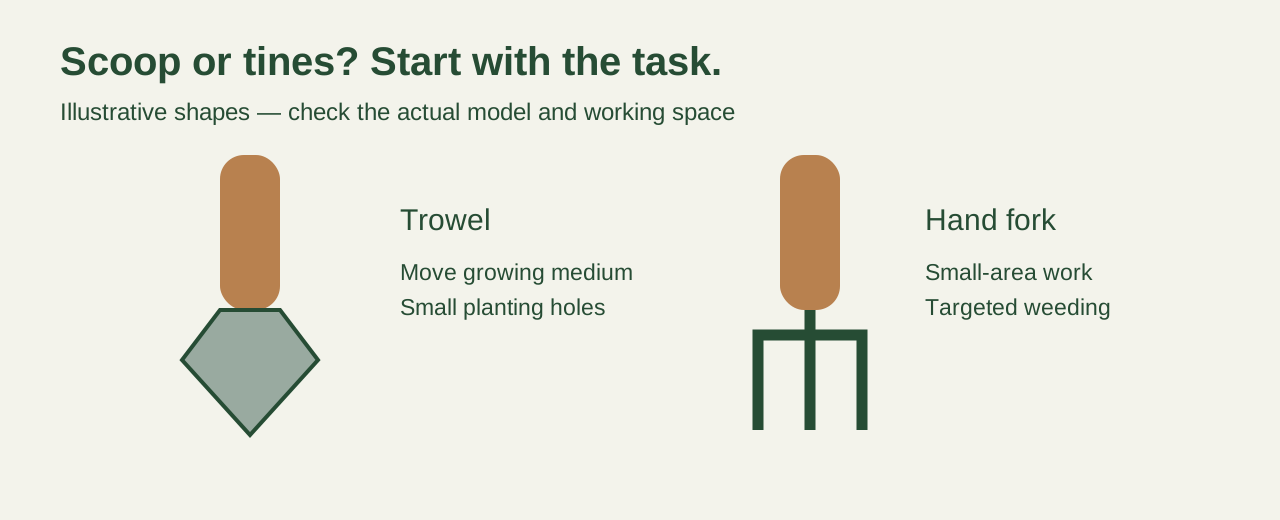
Choose a hand trowel when you need to scoop growing medium or make a small planting hole. Choose a hand fork when its tines help you work a small area or loosen soil around a weed. Neither is a substitute for a full-size digging tool when the ground or task is too demanding.
The choice starts with the job, available space and actual tool shape. “Hand tool” does not mean every model has the same head, handle or strength. This guide compares functions; it is not a product test or a ranking of brands.
Look at the head before the label
A trowel has a scoop-like blade. A hand fork has tines rather than a solid scoop. The Collector trowel product description illustrates a trowel intended for planting. Use a manufacturer's stated purpose alongside the visible head shape rather than assuming a name establishes suitability. Distinguish a short hand fork from a full-size garden fork before following advice written for the larger tool.
Manufacturer instructions add model-specific limits. For example, Burgon & Ball describes its Collector hand fork for weeding in small spaces and working soil or compost. That is a stated purpose for that model, not evidence that every fork is safe for every soil or root system.
A task-based comparison
| Your task | Start by considering | What to check |
|---|---|---|
| Move a small amount of potting mix into a container | Trowel | Blade width and whether it fits the opening |
| Form a small planting hole in workable growing medium | Trowel | Space around nearby plants and the required hole size |
| Work a small surface area without scooping material away | Hand fork | Tine shape, surrounding roots and the model's instructions |
| Loosen the area around an identified weed | Hand fork or a task-specific weeding tool | Plant roots nearby and the weed's growth habit |
| Move a large volume or work hard ground | A more suitable tool or another approach | Do not solve an oversized job by forcing a small hand tool |
This is a selection aid, not a guarantee about a particular plant or surface. A fork cannot carry loose mix as neatly as a solid scoop; a trowel does not replicate the action of separate tines. That difference often settles the choice before you compare brands.
In a container, check space and roots first
A wide trowel may be awkward between the plant and pot edge. Compare the working space with the head's dimensions before buying. A narrower tool may help in a tight opening, but its name alone does not tell you whether it is suitable for the task.
Avoid poking blindly through an established root ball. Around an existing plant, decide what you need to change and where its roots are likely to be. If the problem is a root-bound plant, use our repotting guide rather than treating repeated forking as a cure.
An illustrative example: filling an empty pot calls for a scoop, while working a small unplanted patch beside it may call for tines. The two jobs occur in the same garden but do not require the same action. This example is not an account of a tested tool.
Do not turn every tool choice into more soil disturbance
University of Minnesota Extension's reduced-tillage guidance explains approaches that limit unnecessary disturbance. Its discussion of larger forks does not mean a hand fork has the same leverage or capacity.
For this small-tool decision, first ask whether the area needs to be disturbed at all. Separate scooping, planting and a specific weed task from a habit of repeatedly turning soil. Follow plant-specific and local gardening guidance where the task is uncertain.
Check grip and dimensions without inventing an ergonomic promise
Read the head width, total length, weight and handle information. If you can handle the tool before buying, check whether you can hold it comfortably and control its angle without gripping harder than you expect. A product described as ergonomic is not a personal fit assessment.
For small hands or limited strength, avoid choosing by a photograph alone. Consider the seller's return conditions and the actual task. Stop if using a tool causes pain; this guide does not diagnose a condition or prescribe an adaptive tool.
A useful purchase note has four entries: intended task, available working space, relevant product dimensions and an unresolved fit question. Buying both tools is unnecessary if only one recurring job has been identified.
Leave the tool ready for the next job
Follow the manufacturer's cleaning and storage instructions, keep sharp or pointed parts away from children, and inspect the head and handle before use. A damaged joint or bent tine is a reason to stop and check the tool, not apply more force.
Our five hand tools overview places this pair within a small garden kit. Use it for the wider toolkit; use this comparison when a specific job has narrowed the choice to a scoop or tines.
Reviewed October 14, 2026. Tool suitability depends on the model, plant, soil and user's circumstances. Follow current manufacturer instructions and local horticultural guidance.