Panax Bloom garden note
Water Plants While Away: Build and Check a Vacation Care Plan
Match vacation watering to your plants, record a pre-trip trial and hand the sitter a clear backup plan, with a blank downloadable record.
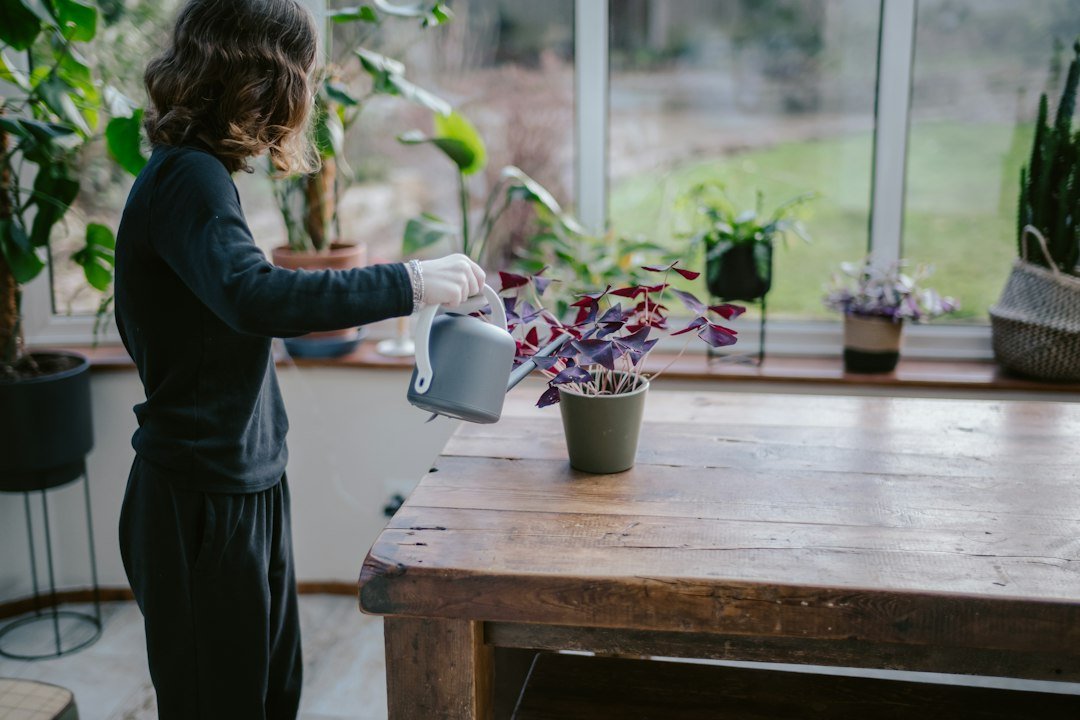
Illustrative external photograph of plant care; this is not an experiment showing unattended watering performance.
To water plants while away, start with the plants and conditions you actually have. Choose a method for each group, run it before the trip and arrange a backup check. A bottle, wick or timer is not a promise that every plant will remain correctly watered for a fixed number of days.
This guide covers ordinary indoor plants and outdoor containers. It provides a record for checking your setup, rather than a recipe for keeping every species on the same watering schedule. For an unfamiliar or declining plant, obtain plant-specific advice before leaving.
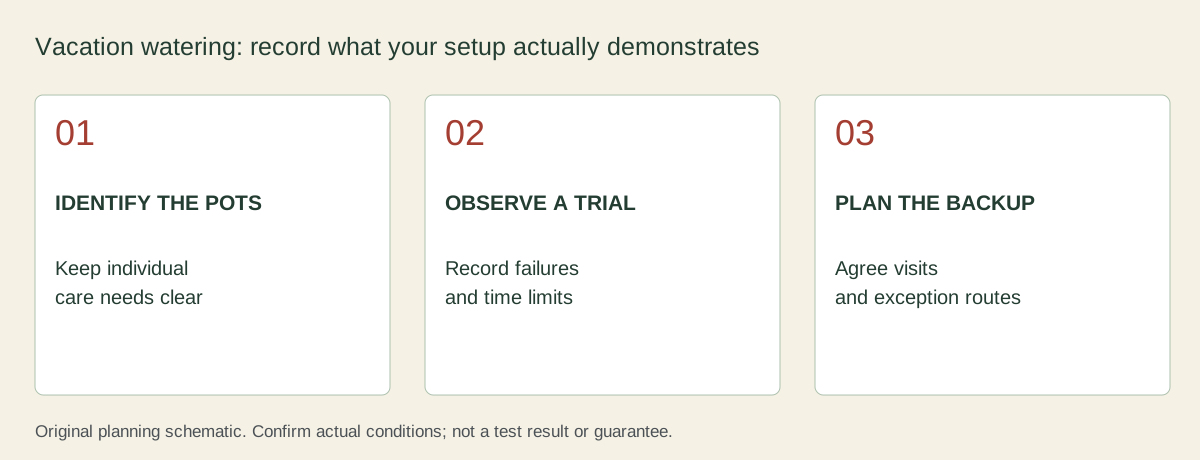
Inventory the plants before choosing equipment
Put a removable identifier on each pot and take a photo. Record the species if known, pot and growing medium, drainage arrangement, location and normal moisture checks. Separate indoor plants from exposed balcony or patio pots. Include the date and time you will leave and return, not simply “one week.”
The UF/IFAS vacation-care guide distinguishes indoor care from outdoor containers and discusses sitters, reservoirs, wicking and irrigation. It recommends setting up an outdoor watering system about a week early to adjust it. These methods need matching to your conditions; their presence in a guide is not evidence that your particular setup will work unattended.
Before documenting the normal check, review root-zone moisture. A dry-looking surface and water appearing under a pot do not by themselves tell the sitter what the entire root zone needs.
Select a setup and its backup together
| Your situation | A method to investigate | What must be demonstrated before relying on it |
|---|---|---|
| Indoor plants already growing in reservoir containers | Existing reservoir system, used according to its instructions | Fill point, overflow route and refill interval work for those plants in the planned location |
| Indoor pots with different moisture needs | A sitter with separate pot instructions; a tested wick only for compatible pots | Each pot's trigger is understood; any wick actually supplies its intended pot without leakage |
| Outdoor containers exposed to variable weather | Sitter, or suitable drip/timer setup with backup visits | Emitters reach the root areas; timer, supply and drainage work; weather changes have a response |
| Pots whose needs you cannot yet describe | Arrange an informed sitter or local advice | Someone can recognize uncertainty and contact you instead of following an invented volume |
Keep reservoir use separate from placing an ordinary pot in standing water. The University of Maryland explains that purpose-built self-watering containers separate a reservoir from growing medium and provide an overflow arrangement. Its bucket example can still need frequent refilling in hot, sunny conditions. The word “self-watering” does not mean a container needs no checks.
Run a trial that records what actually happens
Use the intended position, container and equipment. Record the initial state and the same observations at later checks. If a system needs adjustment, repeat the trial after adjusting it. Give yourself time to see a repeatable pattern rather than installing a new device on departure morning.
A practical trial record should distinguish three questions:
- Does the equipment deliver water where intended?
- Does the pot drain and the plant's moisture condition remain appropriate?
- Can someone recognize and respond if that pattern changes?
If your trial is shorter than the planned unattended interval, it has not demonstrated coverage of the whole interval. Even a full-length trial cannot prove performance during different heat, rain, wind or equipment failure. Arrange a backup appropriate to the consequence of losing a particular plant.
Copy this vacation watering verification sheet
TRIP
Away from [date/time] to [date/time]:
Primary contact and backup:
Who has access, and how is access tested:

PLANT GROUP / POT IDS
Species or identification uncertainty:
Indoor/outdoor and intended position:
Container/medium and drainage or overflow route:
Normal plant-specific moisture check:
Method, equipment model and instructions:

TRIAL
Started [date/time], initial condition:
Each check [date/time]: moisture observation / plant condition /
water supply level / flow and drainage / weather or room change:
Leak, clog, dry area or excess wetness observed:
Adjustment made and repeat trial dates:
Longest demonstrated interval under these conditions:
What has not been demonstrated:

SITTER HANDOFF
Visit dates agreed:
What to inspect before watering each group:
Plant-specific action and source of that instruction:
What to leave alone:
If equipment fails, weather changes or a plant declines:
Contact route and photo requested:
Backup person if first contact cannot respond:
Keep door codes and other access secrets in an appropriate private channel rather than a publicly shared sheet.
Worked example: a trial that is not enough for a week away
This is a fictional planning example, not a plant experiment or species-specific recommendation. A traveler plans seven nights away. Group A is three indoor foliage plants; group B is two exposed patio pots. The owner has only two days available to test a reservoir and has not identified one patio plant.
| Observation in the fictional record | Decision to write down |
|---|---|
| The indoor reservoir supplied water for two trial days without a visible leak | Record two demonstrated days only; do not write “safe for seven nights” |
| One patio emitter missed its intended pot during the first run | Reposition it and repeat the check; that failed run does not count as a successful trial |
| The patio forecast is hotter than the trial weather | Ask the sitter to check conditions and use the agreed plant-specific response; no invented universal increase in water |
| One plant's normal watering trigger is unknown | Obtain identification/care advice or assign an informed sitter before departure |
The owner chooses scheduled visits for both groups and gives the sitter the pot photos, individual instructions and contact route. The trial observations remain in the record, including the failure. No survival outcome is claimed.
Give the sitter an exception route, not only a calendar
Demonstrate the ordinary check once if possible. Ask the sitter to explain which pot the instruction applies to and what would make them pause. A request to “water everything daily” hides differences between pots and provides no response to a blocked emitter or already wet growing medium.
For patio layout, use grouping pots without confusing watering. Keep identifiers visible after moving pots and confirm that the grouping still allows access and drainage.
Before leaving, verify the supply and agreed visits again. On return, record what the sitter actually observed, including an uneventful check. That gives your next trip a documented starting point without turning one successful absence into a guarantee.
Download the editable planning record (TXT). Blank fields are for your own observations.
Continue this garden route
Three nearby tasks, kept in the same bed.
Plant Care
Check Root-Zone Moisture Before Watering Again
Look below the dry surface and compare the plant, pot weight, weather, and drainage before adding more water.
Open the garden note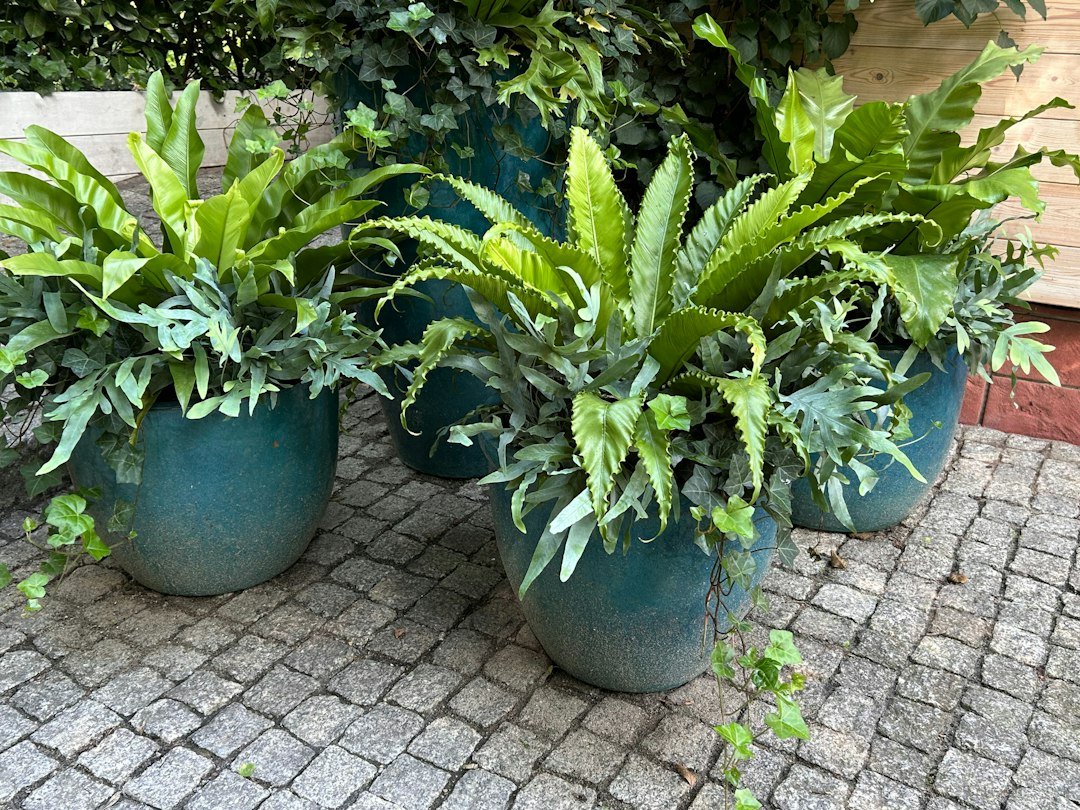
Pots & Balconies
Group Patio Pots Without Making Watering Confusing
Arrange containers by light and moisture needs first, then use height and color to make the group readable.
Open the garden note